
Tag: sustainability

Measuring What Matters: New Indicators to Track Climate-Ready Cities

As urban planners, we are at the forefront of preparing our cities for the escalating challenges of climate change, particularly extreme heat and heavy rainfall. We develop strategies and implement plans, but a critical question often remains: How do we know if our efforts are actually working? Quantifying the progress of climate adaptation can be challenging2.

A new review article by Nisha Patel and her colleagues, “Assessing Progress in Urban Climate Adaptation,” delves into this very issue, providing a comprehensive look at Urban Climate Adaptation Indicators (UCAIs) that can help municipalities track their progress in creating heat- and water-sensitive cities. The study, which combines a literature review with expert workshops in Germany, identifies 27 key indicators that planners can use to measure real-world changes in urban infrastructure.

What Are Urban Climate Adaptation Indicators (UCAIs)?

UCAIs are metrics that help monitor the tangible outcomes of climate adaptation plans over both the short term (6 months to a decade) and long term (over a decade). Instead of just tracking inputs (like money spent), these indicators focus on results—the visible, planned, or built changes that reduce climate risks like heat stress and flooding.

The researchers grouped these 27 indicators into five key areas crucial for urban resilience:

  1. Surface and Urban Overheating Indicators: These metrics help cities understand and mitigate the Urban Heat Island (UHI) effect. While complex indicators like
  2. Building Type and Structure Indicators: The physical form of a city—its density, building height, and materials—plays a major role in its climate. Indicators in this category include
  3. Green Infrastructure Indicators: This is one of the most promising categories identified in the study. Green spaces not only mitigate heat and heavy rainfall but also improve air quality and public health.
  4. Soil-Sealing Indicators: Soil sealing—covering the ground with impervious surfaces like concrete and asphalt—is a major driver of both urban heat and flood risk. Tracking the
  5. Water-Sensitive Urban Development (WSUD) Indicators: These indicators focus specifically on managing heavy precipitation and reducing flood risk. Key metrics include the

Key Takeaways for Planners

The review concludes that the most promising indicators are those related to green infrastructure and soil sealing. These metrics are powerful because they assess multiple adaptation measures simultaneously, have clear co-benefits for health and biodiversity, and avoid major conflicts with other urban planning goals.

However, the authors stress a critical challenge: the lack of systematic, high-resolution, and readily available data to calculate these indicators effectively. To move forward, planners need better tools and national-level support to continuously monitor climate-related changes, allowing for more informed and effective decision-making in building the resilient, sustainable cities of the future.
Streets of Tomorrow: Building for a Changing Climate

Our cities are on the front lines of climate change, with few places in the world more impacted than my current home state of Florida. In many parts of the state, you no longer need a hurricane for roads to flood—just a sunny day and a high tide.

While the Florida Department of Transportation (FDOT) has thankfully moved past climate change denial (kind-of ?) and begun the critical work of studying vulnerabilities and elevating some key roads, their pace feels out of sync with the urgency of our reality. The current approach is more reactive than proactive. This continues to result in a patchwork of fortified roads rather than a truly resilient, statewide network designed for the future. As the water keeps rising, we’re left with a crucial question: are these efforts enough to keep Florida moving, or are they just expensive band-aids on a rapidly worsening wound?
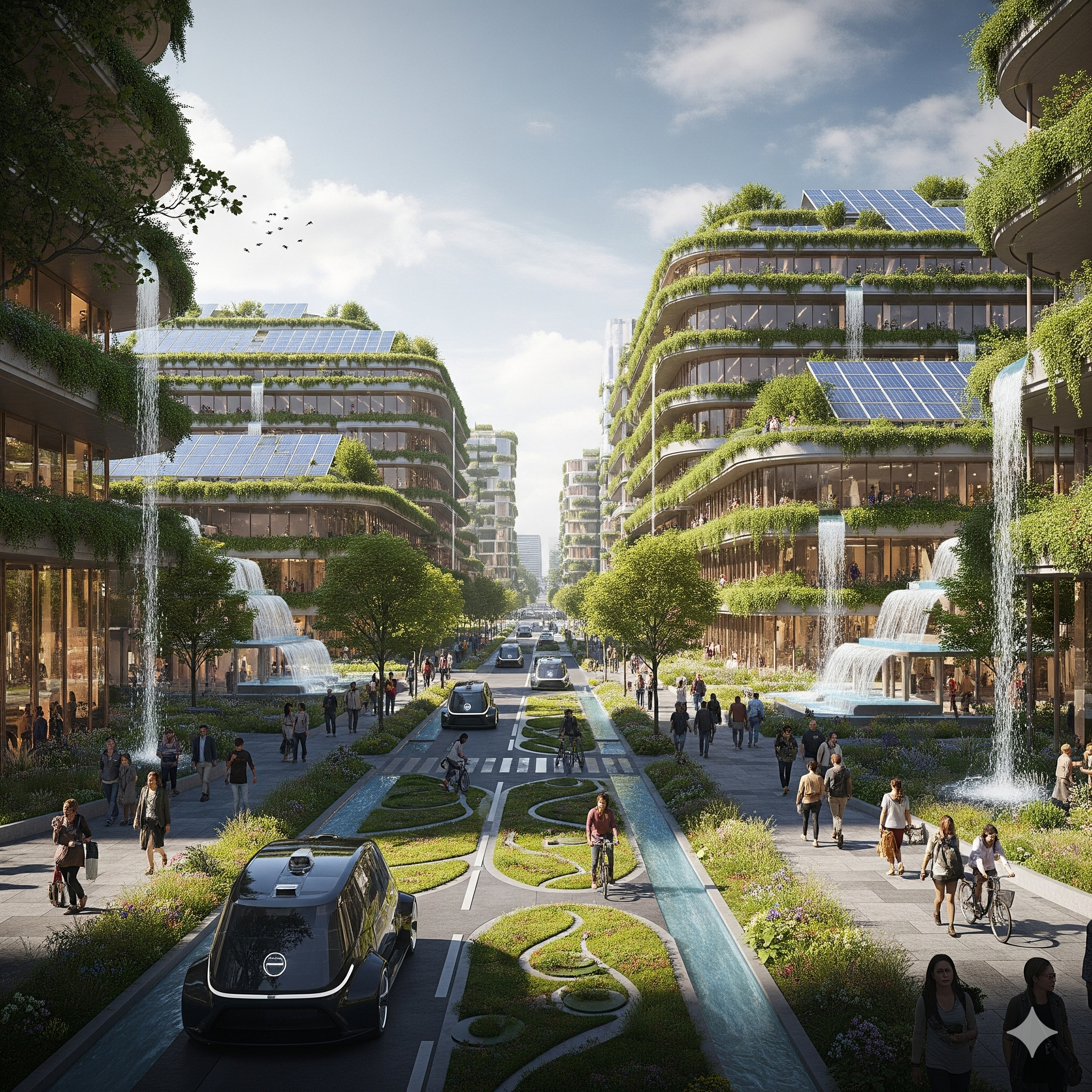
Traditionally, we’ve treated mitigation and adaptation as separate tasks. Mitigation strategies aim to reduce the sources of greenhouse gases. On our streets, this means encouraging walking, cycling, and public transit over driving, installing EV charging stations, and using low-carbon construction materials. Adaptation, on the other hand, means adjusting to the climate reality we face now. This includes planting trees for a cooling shade canopy or using permeable pavements that allow stormwater to soak into the ground, reducing flood risk.

The most effective approach is to integrate these goals. The magic happens when a single design choice serves both purposes. For example, planting a street tree is a brilliant two-for-one solution. It provides shade to cool the neighborhood and reduce energy demand for air conditioning (adaptation), and it also absorbs carbon dioxide from the atmosphere (mitigation). Similarly, replacing concrete with green infrastructure like bioswales manages floodwater (adaptation) while creating carbon-sequestering green spaces that make walking and cycling more pleasant (mitigation).
Reimagining our streets isn’t just an environmental imperative; it’s an opportunity to create more equitable, healthy, and vibrant communities. By building streets that are cool, green, and prioritize people, we can tackle the climate crisis head-on and improve our quality of life. It’s time to pave the way for a resilient future, one block at a time.

A local, proactive approach is more critical than ever. With federal policies actively working against meaningful climate action, waiting for leadership or support from Washington is simply not a viable strategy. The responsibility to protect our communities from rising water and extreme weather falls squarely on our own shoulders. Resilience can’t be dictated by national politics; it will be built by us; through the bold and integrated design of the streets we call home. It’s up to us to demand and create a safe, sustainable future we all so desperately need and deserve.